








Why Iran’s Oil Wells Are Unlikely to Literally Explode
Donald Trump has repeatedly claimed that if Iran cannot export its oil, the country’s underground oil infrastructure could “explode” and become permanently damaged. While his wording is dramatic and scientifically inaccurate, experts say there is a small element of truth behind the comments.
The issue is not that oil wells suddenly blow up underground like bombs. Instead, the real concern involves pressure buildup, storage shortages, and long-term reservoir damage when oil production is abruptly halted.
What Actually Happens When Oil Production Stops?
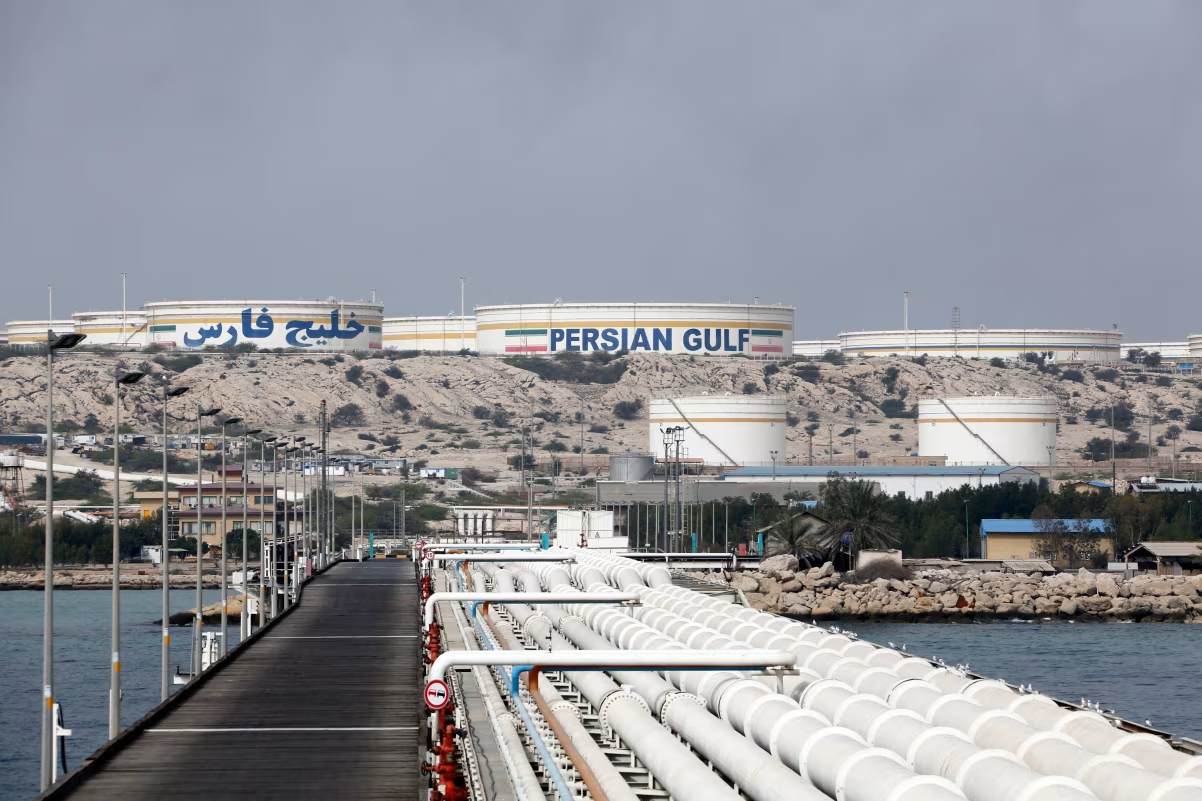
Oil wells operate under carefully managed underground pressure. Crude oil flows through pipelines into storage tanks, refineries, or export ships. When exports are blocked — such as during sanctions, war, or a shutdown of the Strait of Hormuz — producers may run out of storage space.
At that point, companies may be forced to “shut in” wells, meaning production is temporarily stopped.
Shutting in wells is common in the oil industry and does not usually cause explosions. However, if poorly managed over long periods, several problems can occur:
- Reservoir pressure can change dramatically
- Pipelines may experience mechanical stress
- Gas buildup can create safety risks
- Some oil fields may suffer permanent reductions in output
- Equipment corrosion and blockages can damage infrastructure
In extreme cases, restarting production later can become difficult or expensive.
Why Trump’s Description Is Misleading
Trump suggested that underground oil systems “literally explode” in almost all cases. Energy experts say this is inaccurate.
Oil reservoirs are designed to withstand pressure fluctuations, and countries regularly shut down wells during economic downturns, maintenance, or geopolitical crises without catastrophic underground explosions.
The larger concern during the Iran situation is economic and logistical:
- Iran may struggle to export oil due to conflict and sanctions
- Storage facilities can become overwhelmed
- Shipping routes may be disrupted
- Regional oil producers could face production slowdowns
These issues can damage production capacity over time, but not in the immediate, explosive way Trump described.
The Bigger Regional Concern
The conflict has created serious pressure on Middle Eastern energy infrastructure. If tanker traffic through the Strait of Hormuz remains disrupted, oil-producing countries across the region may face storage shortages and forced production cuts.
Since a major percentage of the world’s oil supply passes through the Strait of Hormuz, any prolonged disruption could affect global fuel prices and energy markets worldwide.
So while Iran’s oil fields are not about to spontaneously explode underground, the situation still represents a significant energy and geopolitical challenge.